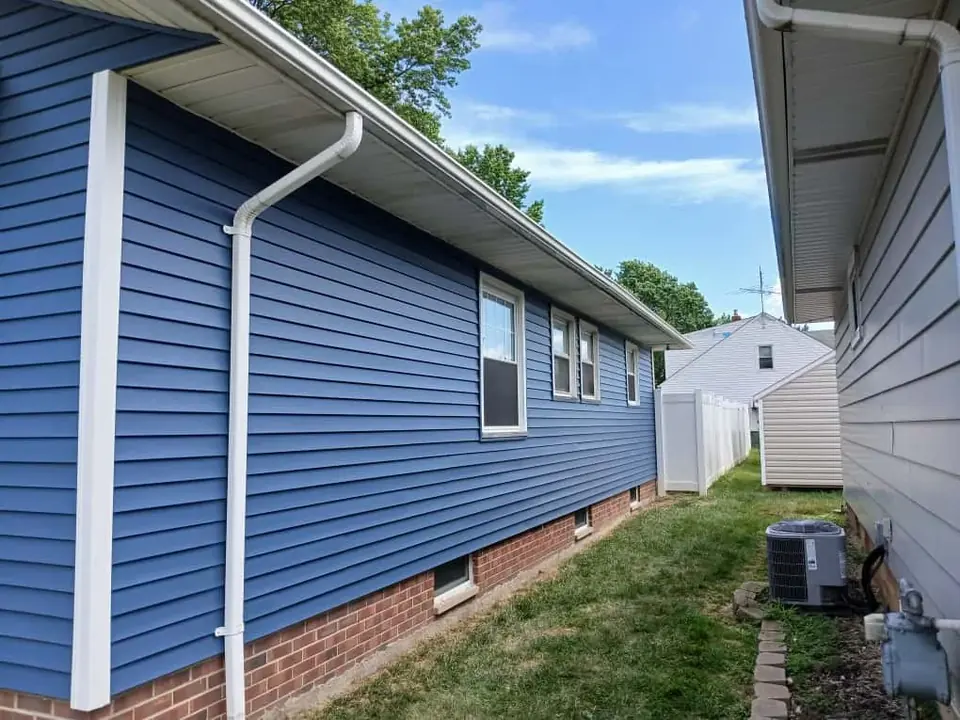
A small system with a big job
Gutters don't get much attention until they fail. Then you find out how much work they were doing. Every rainstorm sends a lot of water off your roof, and without a working gutter system it runs down your siding, splashes against the foundation, and soaks the ground next to your basement walls.
Blackridge Exteriors installs seamless gutter solutions designed to direct water away from your home's foundation, roof, and siding. They're built for durability, low maintenance, and reliable performance in all weather conditions.
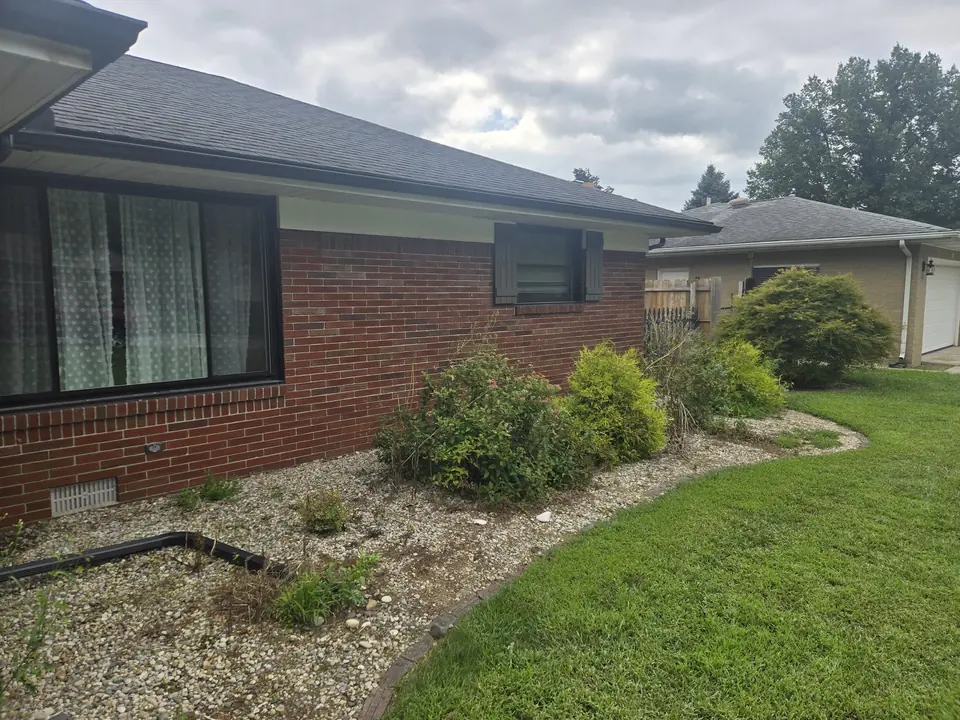
Where the water ends up matters most
A gutter that catches water and dumps it at the corner of the house hasn't solved much. Downspout placement and discharge are what protect the foundation.
The U.S. Department of Energy's Building America Solution Center recommends that downspouts terminate at least 5 feet from the foundation, or feed an underground catchment system at least 10 feet away. It also warns against connecting gutter drain pipe to a perforated foundation drain, because that soaks the foundation instead of protecting it.
A good gutter plan accounts for the size of the roof, where water concentrates in valleys and corners, and how the ground around the house slopes.
Why seamless gutters
Sectional gutters are pieced together from shorter lengths, and every joint is a spot that can loosen, leak, or snag debris over time. Seamless gutters run in continuous lengths along each stretch of roofline, so the only joints are at the corners and downspouts.
Fewer seams means fewer places for water to drip behind the gutter onto your fascia, and fewer weak points for ice and debris to work on.
We run every gutter seamless on site, in 5-inch or 6-inch, so the only seams are at the corners and the outlets. Six-inch gutters move noticeably more water, which matters on a big roof or a steep one. We install gutter guards too.
Signs your gutters aren't keeping up
- Water spilling over the edge during a steady rain
- Gutters pulling away from the fascia or sagging between hangers
- Standing water or debris that never drains out
- Rust, cracks, or drips at the joints
- Peeling paint, stains, or rot on the fascia and siding below
- Washed-out mulch, eroded soil, or puddles along the foundation
- Damp spots or water in the basement after heavy rain
Gutters and Northwest Ohio winters
Winter is hard on gutters around Toledo. Leaves left in the gutters after fall hold water that freezes solid, and a gutter full of ice is carrying a lot of extra weight. Aging gutters and worn hangers are the first to pull loose.
It's worth being clear about ice dams, because gutters often get the blame. Ice dams form when heat escaping from the house melts snow on the roof and the water refreezes at the colder roof edge. The fix is usually air sealing the attic and adding insulation, not new gutters. If that's what we see at your house, that's what we'll tell you.
Fix them or replace them?
Loose hangers, a leaking corner, or a downspout that's come apart can often be repaired. And if your gutters are simply clogged, a good cleaning may be all they need.
Replacement is worth considering when gutters are rusted through, sag in several places, are too small for the water your roof sheds, or are sectional gutters that keep leaking at the joints. It's also a sensible time to replace them if you're getting a new roof, since the two work together at the roof edge.
What affects gutter pricing
- Total length of gutter runs around the house
- Gutter size and material
- The number of downspouts, corners, and elbows
- Height of the home and how easy it is to reach
- Removal and disposal of old gutters
- Fascia repairs, if the wood behind the old gutters is damaged
- Downspout extensions or underground drainage
How a gutter job works
- Schedule your free estimate: call 419-233-1888 or request one online. Website requests get a response within 48 hours.
- Get a clear plan: we look at your roofline, your existing gutters, and where the water is going now, then give you a straightforward quote with no pressure.
- We get to work: skilled installation, quality materials, clear communication, and a clean site when we leave.
- Final walkthrough: we go over the finished system with you, including where each downspout discharges.
Sources
- Downspouts should terminate at least 5 feet from the foundation or to an underground catchment system at least 10 feet from the foundation; do not connect gutter drain pipe to a perforated foundation drain. basc.pnnl.gov
- Ice dams are caused by heat warming the upper roof so snow melts and refreezes at the colder edge; prevention is air sealing the ceiling and adding insulation. extension.umn.edu